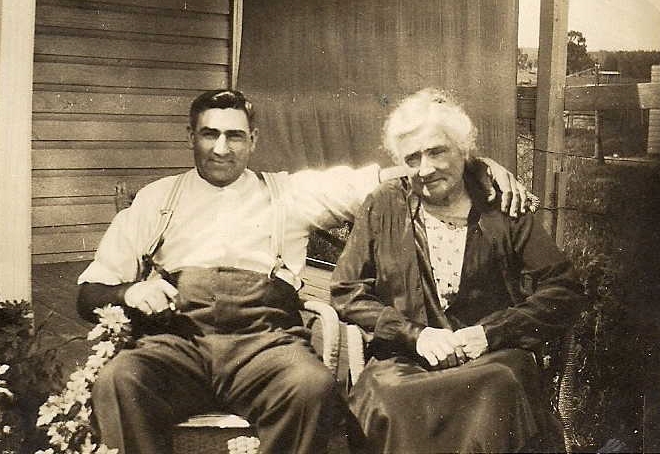
Denise Hayes – proud Wiradjuri woman and tireless researcher.

Denise Hayes’ untimely death in September 2024, just a year ago, is the loss of an indefatigable researcher – generous with her information and proud of her Aboriginal descent. Something of the breadth of her efforts can be seen in the introduction to her book on her Wiradjuri Kennedy family.

Many years ago, I started compiling my family history. I was told we had an Aboriginal connection…I found that I was descended from an Aboriginal family named Kennedy who had lived at Warangesda Aboriginal Mission, Darlington Point. New South Wales. This family descended from the Wiradjuri Aborigines and the white Kennedys at Jerilderie New South Wales. 

A union between Maria, a Wiradjuri Aboriginal woman and a white man, Robert Kennedy squatter at Jerilderie, resulted in a child being born, David Kennedy senior. I am a great, great, great granddaughter of Maria. Her son David Kennedy senior is my great, great grandfather.

The Wiradjuri Kennedys also descend from the union of Maria with a Wiradjuri man, Frank Kennedy. Their children were Andrew, George, Robert, Albert and Louisa. These are the half-brothers and half-sister of David Kennedy senior.

Her wide-ranging research took her from the New South Wales coast, inland to Jerilderie, with other locations in between.

In the course of my journey I have consulted archives and libraries, talked to family, black and white and visited Jerilderie, Appin, Merri Merrigal, Roto, Hillston,Yass, Gunning and Darlington Point the site of Warangesda – all places places closely associated with Kennedy families and I have tried to build up a picture of what happened to my family.

While some elements of her research have been contested, the book she produced encapsulating her research, is an admirable source of family information, detailing the trajectory of one Aboriginal family in New South Wales and the story  of their survival. It is also a memorial to Denise herself. I personally have much to thank her for.

Her own family was not the only focus of her attention. She also assisted others with their family history and contributed to the history of the Hawkesbury area of New South Wales where she lived much of her life.

Denise’s grandfather, Sidney/Sydney Wilson fought in both the First and Second World War.

Philippa Scarlett

September 2025

Denise and cousin Yvonne Goolagong

Posted in Uncategorized, WW1 | Leave a comment

TINY RYAN  AND THE ANZAC LEGEND

When  Alfred ‘Tiny’ Ryan, Aboriginal boxer and then member of the 2 Battalion, served on Gallipoli  he did not envisage that after the war this service and that of other Aboriginal men would be ignored by his country.

in June 1915, as he lay wounded in hospital in Egypt, he wrote to a friend in the boxing world

The landing at Gaba-tepe, I suppose is just as well known to you as it is to us here, only we have really been on the soil where it took place — never to be forgotten ever in the history of the world. Australia may well be proud and boast of her loyal sons.

 He was killed in France in 1917 so did not live to see the future exclusion of him and his country men from the Anzac legend.

Yet despite this omission and continuing prohibitions, Aboriginal men again volunteered and in larger numbers, for the Second World War.   What makes their service different was that they had seen the shabby treatment experienced by the veterans of the First World War  – yet still they volunteered.  

Official recognition has now been achieved – after a long battle Aboriginal and Torres Strait Islander servicemen have assumed their rightful place in Australia’s history but the early history of the treatment of these volunteers must not be forgotten.

 More on Tiny Ryan can be found in my post https://indigenous-histories.com/2017/04/25/alfred-tiny-ryan-the-boxing-soldier/

Philippa Scarlett

25 April 2025

Posted in WW1 | 1 Comment

IMPORTANT NOTICE. CHANGE OF BLOG ADDRESS

Earlier this year I was the victim of a domain squatter. The result was my posts were inaccessible. I have rectified this by changing indigenoushistories.com to indigenous–histories.com that is by the insertion of a hyphen. At present links to posts within a post no longer work and I will try to rectify this.

Posted in WW1 | Leave a comment

ABORIGINAL SERVICE IN THE FIRST WORLD WAR: SOME REFLECTIONS

2024 marks 110 years since the outbreak of the First World War.

1200 men of Aboriginal descent are known to have volunteered for service in the First World War, most of whom served abroad. Their participation was full. They volunteered from September 1914 to October 1918 and served in all major theatres of war. Some received decorations for valour – Military Medals and Distinguished Conduct Medals and were mentioned in despatches, as well as losing their lives. This took place against the background of a 1909 amendment to the Defence Act 1903, which comments in service records show was invoked by some recruiting officers to prohibit enlistment of Aboriginal men. Pertinent to today is that possibly 80 Aboriginal men served on Gallipoli.

Despite this, Aboriginal participation in the Australian Imperial Force remained unacknowledged for decades – yet another example of the Great Australian Silence pinpointed by W E H Stanner in 1968. In later years Rod Pratt writing on the Light Horse in the journal Sabretache in the 1990s, David Huggonson’s publication of stories of individual bravery as well and his 1980s touring exhibition Too Dark for the Light Horse  and Ray Minniecon’s Redfern Colored Digger March ongoing from 2007, were all important in consciousness raising. The 2011 publication of Philippa Scarlett’s Aboriginal and Torres Strait Islander Volunteers for the AIF: the Indigenous Response to World War One (Indigenous Histories) which was followed by three more updating editions, heralded a new phase in this process. It contained details of approximately 800 Aboriginal volunteers, a major advance on the 245 identified in the 1930s by the RSL journal Reveille and for the first time, aided by more realistic numbers, access to online service records and contemporary documents, presented a detailed analysis of enlistment and other aspects of Aboriginal service – one which has influenced later scholarship.

In subsequent years the momentum to recognise Aboriginal service increased, boosted by Aboriginal will and the efforts of interested non-Aboriginal scholars and supporters. This culminated in 2018 in the publication of Joan Beaumont’s and Allison Cadzow’s Serving Our Country: Indigenous Australians. War, Defence and Resilience. (Sydney: NewSouth Publishing) which signalled at last the achievement of the long awaited recognition of Aboriginal war service. Now there is an Aboriginal memorial in the grounds of the Australian War Memorial and memorials in most Australian states and Aboriginal service in all conflicts is recognised at all levels of government and continues to be the subject of articles in newsprint, television, radio and internet as well as popular and scholarly writing.

However the flourishing movement to accomplish recognition of Aboriginal war service has brought with it some cause for concern. Canadian historian Timothy Winegard was an early exponent of Australian Aboriginal First World War service which he in featured in his 2012 book Indigenous Peoples of the British Dominions and the First World War (Cambridge University Press). His assessment (p.7) of the writing about Indigenous Dominion service which had been published since the 1980s has lessons for Australia. This was that most

works are driven by narrative. …The goal of these studies which succumb to the interpretive orthodoxy based on recycled generalisations and anecdotal corroboration is to ensure indigenous veterans receive public recognition in the increasingly reconciliatory and apologetic western democracies.

This relates in Australia to elements in both the popular and scholarly publications – both of which can overlap and it is clear that much of this overlapping can be laid at the door of ‘recycled generalisations and anecdotal corroboration.’

The overall Australian narrative which has emerged has basic key elements of which the most recurrent is unconditional acceptance of mateship, common to scholarly and popular writers alike. Its existence as an individual phenomenon rather than the popular conception of one embracing all AIF Aboriginal relationships is explored in my article ‘Aboriginal service in the First World War: Identity, recognition and the problem of mateship’ Aboriginal History, 39, (2015), 162-181) available on line via the Aboriginal History site.  Close behind is a string of much repeated ‘facts’ close to assuming the character of conventional wisdoms and which cumulatively could qualify for inclusion with the myths of Australian military history identified by Craig Stockings. (Zombie myths of Australian History, Sydney: University of New South Wales Press, 2010).

These orthodoxies, predominantly relating to enlistment and post war experience are:

  • over 1000 sometimes 3000 men served overseas with the AIF,
  • that they were paid less for their service,
  • that Aboriginal men were prevented from enlisting by a 1914  ‘recruiters’ handbook’,
  • that those who succeeded passed as southern European or Maori
  • that the majority of enlistments took place after a relaxation of regulations in 1917 allowing men with one white parents to enlist
  • and that the most common reasons for acceptance was signing a document declaring this fact

 On top of these are the assertions

  • that there was a high rejection rate based on race,
  • that most came from controlled lives on missions and reserves,
  • and that post-war they were denied the benefits given to white men, such as  repatriation and soldier settlers blocks
  •  they are also said to have been ‘not allowed’ or ineligible to march on Anzac day or to join the RSSILA.

There are elements of truth in most of these statements but mining the information in service and related records challenges commonly held ideas – although it should be stressed in no way changing the central narrative of discrimination and of exclusion from the Anzac legend.

 Of the approximately 1200 men who sought to enlist, to date only three quarters are known to have actually served overseas – the remainder were either rejected immediately or during their training, deserted or died before embarkation.

There was no differentiation in pay – Aboriginal men were recruited on the same terms as non-Aboriginal volunteers.

As far as the constantly repeated assertion in popular and scholarly accounts, that a 1914 recruiters’ handbook specifically prevented Aboriginal enlistment is concerned – so far no concrete evidence has been found for the exclusion of Aboriginal men before 1916 (see Instructions for the guidance of enlisting officers at approved military recruiting depots, Government Printer, Brisbane, 1916). However a 1914 circular issued by General Bridges stated that the qualifications for enlistment of recruits in the AIF should be those laid down in Australian Military Regulations for the militia. These were spelled out in a 1909 amendment to the Defence Act, which prohibited enlistment of men not substantially European but did not mention Aboriginal men. At least one identified 1914 instructions to New South Wales recruiters does not mention Aboriginal men (SRNSW: NRS 10929; [7/6187, Circular Memo No. 829). Efforts to locate the 1914 recruiters’ handbook have been futile but are on-going. A possible reference to it is a source, to date untraceable in Winegard 2012, 187-88. Any input from readers of this blog would be welcome.

The 1917 regulation loosening enlistment requirements had no effect except in Queensland where the continuing influence of Rod Pratt’s Queensland Sabretache 1990s articles has been responsible for the assumption that enlistments increased following this regulation. In fact analysis shows that enlistment as a whole including Aboriginal enlistment had begun to falter by 1917 and continued to do so and most Aboriginal men volunteered in 1915 and 1916.

 Attestations show too that only a small percentage, about 12% came from missions and reserves  – one reason for this being the expulsions from missions and from farms occupied on promisory Protection Board leases which took place in NSW (the state contributing most enlistments), following the 1909 Aborigines Protection Act.

The records also do not support the contention that there was an overtly high proportion of race related rejection although this does not preclude the use of subterfuges to mask rejections based on race. While a small number of men may have used other ethnicities to try to secure enlistment, the majority as far as the records show did not.

Some Aboriginal men, from information in their service records and other sources did become RSSILA (later the RSL) members – although the question of their admission to the social and other activities of the League was uncertain and the RSSILA’s ongoing attitude on balance was a tepid and qualified on (see for instance Riseman and Trembath, Defending Country Aboriginal and Torres Strait Islander Service since 1945 (2016), 50.)

Some men are also recorded in the press and elsewhere as marching on Anzac day although disincentives may have existed across the spectrum of country towns and some capitals. However none of this was ‘official’ as so often implied by the story tellers.

Similarly soldier settlement blocks were received by more than the one or handful sometimes still routinely said to have been their only recipients. My research with Christine Cramer shows In New South Wales alone from a comparison of known Aboriginal service men with records held by State Records, that twenty out of twenty seven applicants had their applications approved, although this success was mostly not replicated in their subsequent history. Photographic and documentary sources including soldier settlement files suggests that at least fifteen physically presented as Aboriginal, including eleven of the successful.

Post-war repatriation benefits were not formally denied and were received by some as evidenced in repatriation records and pension documents in service records but it is likely that others found the unofficial obstacles underpinned by race insurmountable and may not have applied.

Most of these examples result from a conflation of the official position with the discriminatory racist atmosphere prevailing before, during and in the years following the war and in turn relate to ongoing Aboriginal awareness of the essence of past experience although not its detail. But while official policy did not encompass discrimination, the bitter feelings of Aboriginal families testify that unofficially discrimination loomed large in all aspects of the pre and post-war experience of Aboriginal men.

The other telling reason for discrepancy in the story, particularly in some scholarly publications, is the impact of the information provided by the progressive identification of the service of Aboriginal men. An idea of the advances made in these numbers can be gained by referring to updates on this blog. These expanded numbers can radically affect and alter interpretations and analyses with the result that early conclusions reached based on limited numbers now cannot be sustained. 

Overall the picture which emerges differs from that portrayed in popular writing and in a number of cases in scholarly works, which with some honourable exceptions can be guilty of at least one of these generalisations and sometimes more. While many of the errors relate to a misapprehension of the source of the undoubted disadvantages experienced by Aboriginal men – the misapprehension itself reaffirms the existence of the racist society Aboriginal men served in and returned to.

However it can’t be empathised enough that attempting to set the record straight as in the forgoing commentary in no way diminishes Aboriginal service or negates the fact that it took place in the face of discrimination and an all-enveloping prejudiced society. What is clear, from examination of their records and related documents, is that despite the racist society they grew up in and continued to endure (as did their families) both before, during and then post-war, Aboriginal men volunteered freely to fight for their country in an horrendous conflict and did so with distinction, gallantry, personal physical and emotional injury and loss of life. It is fitting on Anzac day to reflect on this and to commemorate them and to celebrate the fact that their service is at last acknowledged.

 Philippa Scarlett 

25 April 2024

Posted in Philippa Scarlett WW1, WW1 | 1 Comment

DAVID HUGGONSON WRITES ON RACISM IN EDUCATION IN QUEENSLAND 1924-1949

David Huggonson is a former teacher with involvement in Aboriginal organisations as well as the author of numerous newspaper and journal articles, particularly on Aboriginal service in the First World War. He is the creator of the exhibition Too Dark for the Light Horse which toured South Eastern Australia in the late 80s and 90s.This collection of photographs of Aboriginal members of the AIF has been hugely influential in informing the Australian public of the neglected reality of Aboriginal war service.  

The following article, generously shared by David, on the problems encountered by Aboriginal children seeking education in Gayndah, Queensland – including children of men who had fought for their country in the AIF- highlights a situation replicated in other places and states.

Philippa Scarlett

2 August 2022

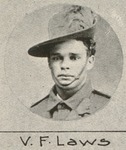
Vincent Law, Queenslander 1918

GAYNDAH ABORIGINAL SCHOOL 1924-1949 A STUDY IN SCHOOL SEGREGATION

                                                     By David Huggonson                               

As early as 1913, the good white parents of Gayndah were complaining about a number of Aboriginal children attending Gayndah State School and the number of blacks camped in the neighbourhood of Oakey Creek.  The secretary of the school committee, Mr Coogan, telegraphed the Education Department threating a white boycott the school. [i] Furthermore, they called for the camp blacks to be sent to Barambah Mission Station where a school existed.

Inspector Taylor was sent to investigate and found that Mrs Law, a half-caste who rented a house near the camp had some children who attended school living with her.  Inspector Taylor also reported that a number of half-castes from the camp attend the Church of England Sunday School held in the Parish Hall. [ii]

On 13 August 1913, it was announced in the Brisbane Courier that the Chief Protector of Aborigines is about to make an interesting experiment in the Gayndah District. A number of intelligent half-castes, most of whom could read and write, were to be given small plots of land, which was heavily infested prickly pear, about three miles from Gayndah. The plan called for them to clear and fence their 10-acre plots and to become self-sufficient, in addition to continue to do clearing and fencing work for local farmers.  The Chief Protector foreshadowed an Aboriginal school if the proposed settlement proved a success.

In May 1918, the Department of Education agreed to establish a special school for Aboriginal children and a Mr William was asked to be the teacher.  In December 1920 it was reported that three hundred and seventy-one pounds had been authorised to erect a new school for the blacks.[iii]  Around this time the Department of education refused to reopen Bon Accord School near Wetheron and eventually moved the school building to another site. Bon Accord was one of the Cooperative Communities established on 2,350 acres northeast of Gayndah during the depression of 1993-94. [iv] The new Aboriginal school began operations in mid June 1924. 

It is interesting to note that the Aboriginal children denied entry to the Gayndah State School were offspring of men allowed to enlist in the Army of White Australia during World War One.  The 22-year-old horse breaker, Walter Couchy served with the 7th Field Artillery Battalion.  Vincent and Douglas Law, both served with the 2nd Light Horse Regiment. However, 26-year-old Robert Bond was discharged because he was deemed “not substantially of European origin”.  His attestation papers state that his father was a half-caste and his mother a full-blood Aborigine.

Reading through the Admission Registers for the Gayndah Aboriginal School, it encapsulates some Queensland Aboriginal History. [v] For example, George Carbine father of Walter most likely gained his surname from a Native Police Mounted Police officer who named his ancestor after the snider carbine used to deadly effect by the force.  Mi Mi and Cobbo are only two Aboriginal words, which became surnames.

The Aborigines of Gayndah went from annual blanket handouts on Queen Victoria’s birthday [vi] to integration into the Gayndah State School, for the school year beginning in 1949.  It took the Second World War and the Nazi holocaust to discredit eugenic theory and the service of Aboriginal men in the Australian Army in two wars to finally win a degree of acceptance and some citizenship rights.


[i] Bundaberg Mail and Burnett Advertiser 25 February 1913, page 2

[ii] Bundaberg Mail and Burnett Advertiser 6 March 1913, page 4

[iii] Brisbane Telegraph, 17 December 1920, page 6

[iv] Metcalf, Bill (1988) “The Gayndah Communes” Central Queensland University  Press and Maryborough Chronicle 30 April 1921 , page 3

[v] Queensland State Archives EDU/AA 428,  Film Z1447

children of men who had fought for their country in the AIF.

[vi] Maryborough Chronicle, 5 June 1879, page 2

Posted in WW1 | 5 Comments

ABORIGINAL SERVICE IN WORLD WAR ONE: 63 MORE AIF VOLUNTEERS NAMED.

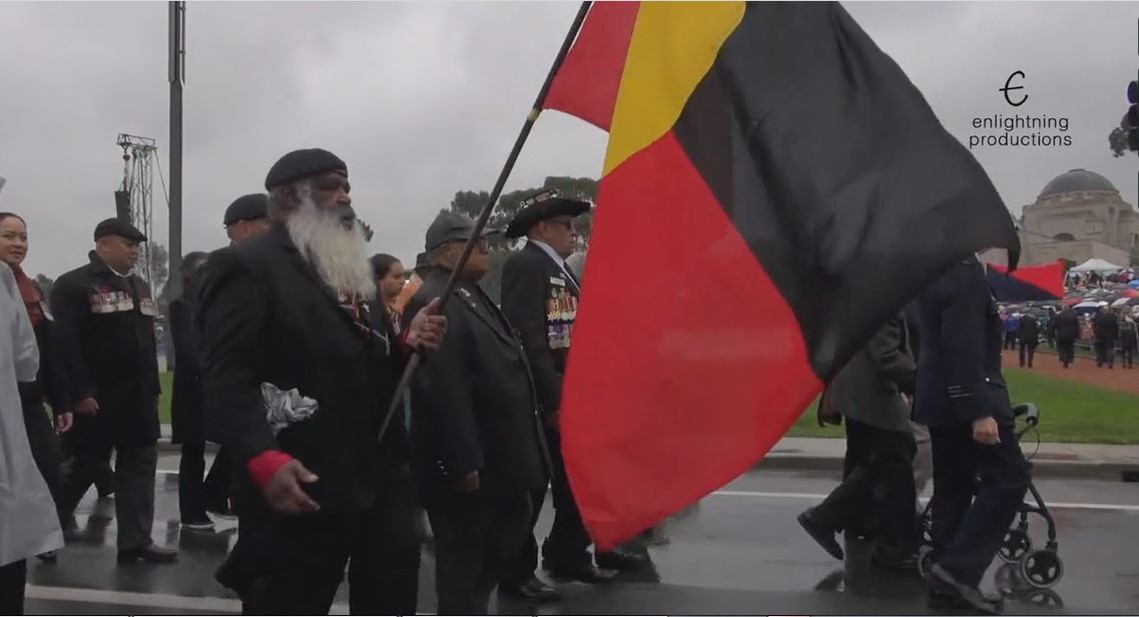
Anzac march 2017, Canberra. Courtesy Enlightning Productions

It is now ten years since the publication of Aboriginal and Torres Strait Islander volunteers for the AIF: the Indigenous response to World War One. This contained, as well as analysis and commentary, a list of 800 men who volunteered to serve in the AIF. In the following years this number has been augmented and now stands at 1,190 of whom 929 served overseas. To add to the updates in the fourth edition (2018) of Aboriginal and Torres Strait Islander volunteers for the AIF and to further updates published in this blog, the names of the 63 additional men most recently uncovered are published below.   While information from Indigenous Liaison Officer Michael Bell of the Australian War Memorial, (ably aided by volunteers including Des Crump, Marg Powell and Sandra M Smith) has in recent years been of extraordinary value – the lion’s share of the new identifications has been the result of the efforts of Leura genealogist Christine Cramer.

The names published in Aboriginal and Torres Strait Islander volunteers for the AIF in its 2011 and subsequent editions, constitute the first publicly referenced list of volunteers. This was constructed after a careful review of available lists circulating in previous years. Review and revision of these lists was supplemented by intensive scrutiny of service records in the National Archives of Australia‘s Series B2455, First Australian Imperial Force Personnel Dossiers, 1914-1920, digitised on the NAA web site. Basic tools used were searching with appropriate name and place keywords in Series B2455, plus consultation with biographies, autobiographies, local histories, historical societies, newspaper articles and information in archives other than NAA, including birth, death and marriage records.This is to name just some of the sources used – which as always have been under pinned by information given by families of the men themselves. In April 2021 the current total of over a thousand men (a number  predicted in the first edition of Aboriginal and Torres Strait Islander volunteers for the AIF) is a massive increase on earlier years. This is despite, in a few cases, the removal of men, who in a review of the references, have proved to be non-Indigenous. The reason for this major leap from the 245 men named 90 years ago by the RSSILA journal Reveille (a listing which had limited circulation and impact) is discussed by Indigenous Histories in https://indigenous-histories.com/2016/03/29/understanding-the-numbers-the-reveille-lists-and-aboriginal-men-in-the-first-aif/

What does this increase mean?

Even with these additions, in comparison with total first AIF numbers of c. 432,000, the numbers of Aboriginal volunteers remain small. However the significance lies not in the numbers but in the fact that these men freely chose to serve in the face of prohibitive legislation and against the back ground of the official and unofficial discrimination which dominated Aboriginal lives. In doing so they suffered all the penalties of service: the trials of separation, the fear, and emotional and physical impairment and death, all of which were compounded by the lack of recognition which followed their return to life in Australia. Their service is symbolic of the fact that Aboriginal people belonged to Australia prior to invasion and that it is their country and they are entitled to fight for it and did so. Aboriginal men are not recorded as seeking to serve in order to achieve better living conditions and equality during the war itself but this motive is a theme of post war correspondence and is also reflected in public comments by Aboriginal communities. In fact many Aboriginal communities all over Australia supported the war and in some cases raised funds to assist the war effort. However just prior to the commencement of the Second World War, Aboriginal activist William Cooper, who had lost a son in France, probably summed up the feeling of many when he described the World War One service of Aborigines as ‘a thankless task’ unrewarded as it was by any official change to his people’s disadvantaged status.

The records held by the National Archives no doubt still have more names to give up, to add to those acknowledged to date, but it is probably safe to say that the majority of volunteers have been identified. While individual stories are now being told – in this blog and proliferating elsewhere, there are many more still to be unfolded. Identifying and listing the names of those Aboriginal men who volunteered and in most cases went on to serve their country, is a tangible way of pointing to their existence and providing a pathway to recognising Aboriginal men’s individual service and the contribution of their Aboriginal comrades.

I wrote in the Australian War Memorial’s publication Wartime in 2016 that in the years following the war ‘racism persisted and non-Aboriginal Australians remembered only that they had fought to “keep Australia white” as the national legend which excluded Aboriginal service gained ground in Australia’s war remembrance’ and that when ‘in the early 1970s the first significant but tentative steps were taken to recognise the service of Aboriginal men, many were already dead, often prematurely and full recognition for those who gave their services so willingly was still decades away.’

In the 20th century, following the First World War, memorials and honour boards were created by Aboriginal people, compensating for omissions on country town and city monuments. Now In 2021 the picture has changed. Not only are there official Aboriginal war memorials in several states – and in the Australian Capital Territory, at the Australian War Memorial – but symbolically, Aboriginal and Torres Strait Islander veterans and their families were invited to lead the Anzac Day march in Canberra in 2017. Today we are the richer as a nation for the inclusion of Aboriginal war service in Australia’s Anzac commemoration and for the fact that Aboriginal service has at last achieved its rightful place as an identified part of Australia’s history.

Philippa Scarlett and Christine Cramer

 22 April 2021

AIF VOLUNTEERS IDENTIFIED SINCE 2019

NOTE. Records for names without an asterisk are held in NAA Series B2455. Those with an asterisk are held in NAA MT1486/1. Not all of this series is digitised.

Name and Service NumberPlace of BirthEnlistment PlaceLink to Record
ALLFORD Mervyn Raymond 102Railton TasHobart TasService Record
BARTLEY Frederick N/A*N/A (NSW)Dubbo NSWRecord
BIDICE Alexander 1627Proserpine QldTownsville QldService Record
BLOOMFIELD Norman 5403Bourke NSWDubbo NSWService Record
BLOOMFIELD Clarence Gordon N/A*N/AVictoria Barracks, Sydney NSWRecord
BOWMAN Arthur 234AFremantle WAPerth WAService Record
BOWMAN William 1515Sydney NSWPinjarra WAService Record
BROWN Albert 1522Mungindi NSWNarrabri NSWService Record
BROWN Frederick George N94556 (born Frederick CHUNG)Tamworth NSWSydney NSWService Record
BROWN Leslie Edward N10010Mungindi NSWNarrabri NSWService Record
CAMPBELL Charles Robert 3442Charleville QldRoma QldService Record
COLLINS Albert Roy 3334Mudgee NSWDubbo NSWService Record
COOPER Rufus Paul 3453Moree NSWEmerald QldService Record
DE LAUNEY Henry Albert 716Sydney NSWSydney NSWService Record
DOTTI Tasman N/A*Pelican Island NSWN/ANot Digitised
ETCHELL William Henry 718 (born WEBB)Goulburn NSWKensington, Sydney NSWService Record
FLETCHER Charles Joseph 375ATambo QldRockhampton QldService Record
FRASER Alfred 770Come-By-Chance NSWNarrabri NSWService Record
GILLETT Leslie Frank Sleigh 137Cowra NSWSydney NSWService Record
GRANT William 4691Cowra NSWSydney NSWService Record
HADICKS Edward Andrew 3425Gilgandra NSWDubbo NSWService Record
HALL Godfrey 7717Forbes NSWSydney NSWService Record
HARTMIRE John James 6607Braidwood NSWR A Showground Moore Park, NSWService Record
HEANEY Alfred 22811Dubbo NSWDubbo NSWService Record
HICKMAN Walter Henry 411Moree NSWLiverpool NSWService Record
KENNEDY John William N/A*N/A (address Adelong NSW)N/ANot Digitised
KENNEDY Dennis Joseph 9400Adelong NSWCootamundra NSWService Record
KENNEDY Robert Anthony Mullan N/A*N/A (address Adelong NSW)N/ANot Digitised
LEFFLEY Alfred Arthur N/A*N/A (address Coona-barabran NSW)N/ANot Digitised
LONE Ernest 5418Gympie QldRockhampton QldService Record
LONE Harold 3912Gympie QldGladstone QldService Record
LONG Bert William 3425 (AKA BELL)Coorow WAGeraldton WAService Record
MATTHEWS George Samuel Joshua 5136Quirindi NSWArmidale NSWService Record
MAYERS William 151Bungwahl NSWWest Maitland NSWService Record
McKENZIE Andrew Joseph 1981Gunnedah NSWLiverpool NSWService Record
McKENNA Thomas Edward 2225Cangai NSWArmidale NSWService Record
MILLIGAN John Edward 4524 (alias of Jack Milton)New Zealand [Swansea NSW]Holsworthy NSWService Record
MOORE Ernest 1342Broken Hill NSWBroadmeadows VicService Record
MOORE Frederick 1773Broken Hill NSWAdelaide SAService Record
MOSES William 7295Newcastle NSWNewcastle NSWService Record
MOXON Herbert Victor 3685Tamworth NSWTamworth NSWService Record
NEWCOMBE Henry Redfern 5421Grenfell NSWCootamundra NSWService Record
NEWHAM Vincent Cuthbert DepotCowra NSWLithgow NSWService Record
OAKMAN Marcus Ellery Gordon 851Tumbarumba NSWBroadmeadows NSWService Record
PARSONS Leslie 5158Tamworth NSWArmidale NSWService Record
PAUL George Arnold 3641Dubbo NSWDubbo NSWService Record
PAYNE Roy 584Bourke NSWLiverpool NSWService Record
PEELER John N/A*N/A (address Peak Hill NSW)N/ANot Digitised
REDMOND William Andrew 168Wingham NSWArmidale NSWService Record
RYAN Allan N77901Quirindi NSWTamworth NSWService Record
SEIDEL Albert William 142Braidwood NSWSydney NSWService Record
SEIDEL Alfred George 1276Mongarlowe NSWGoulburn NSWService Record
SEIDEL Edward Henry 2395Braidwood NSWGoulburn NSWService Record
SINN Joseph Bruce 3214Gayndah QldBrisbane QldService Record
SMITH Archibald Charles 22966Launceston TasMelbourne VicService Record
SMITH Clifford Christy 2367Adelaide SAKeswick SAService Record
SMITH Sydney William 5212Brunswick VicAdelaide SAService Record
TATTERSALL Charles Raymond 18266Peak Hill NSWDubbo NSWService Record
TATTERSALL John Francis 7756Tomingley NSWCessnock NSWService Record
THOMAS George Edward 3004Wellington NSWDubbo NSWService Record
THOMAS James William 6157Wellington NSWDubbo NSWService Record
WARNER Albert 3537Chinchilla QldBrisbane QldService Record
WILLIAMS Kenneth Victor 60310Hillgrove NSWTamworth NSWService Record

Posted in WW1 | Leave a comment

WALTER PARKER, NEWLY IDENTIFIED BOER WAR SOLDIER: A TRIUMPH FOR FAMILY HISTORIAN

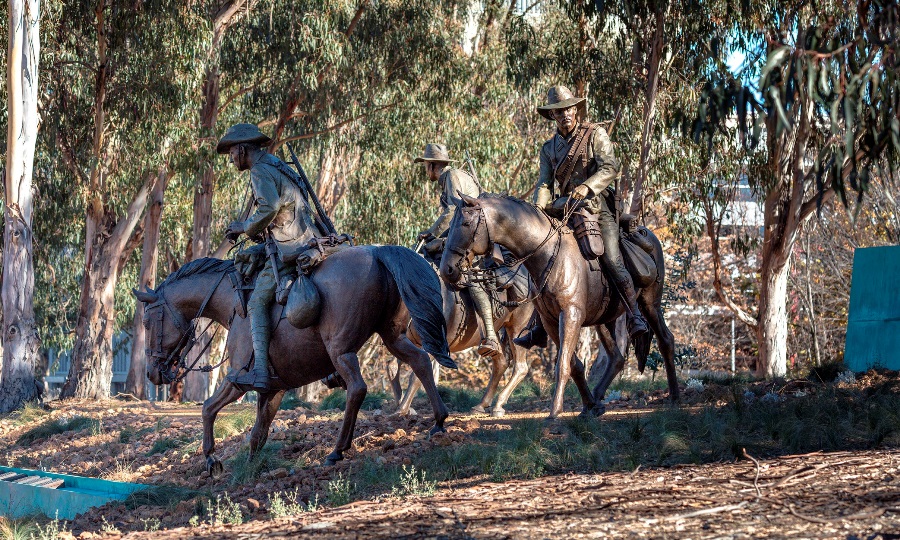
Section of the Australia National Boer War Memorial, Anzac Parade Canberra dedicated in 2017 Photo Ben Wrigley. https://www.bwm.org.au/

The upsurge in family history research in recent years has greatly assisted in the identification of the service of Aboriginal men in Australia’s conflicts. This has most recently been the case with an Aboriginal man from Western Australia who served in the Boer war.

The World War One service of the Aboriginal Dickersons was identified initially by Jan ‘Kabarli’ James (Forever Warriors 2010 pp.86, 87) and later augmented and clarified by family researcher Maureen Roberts.  Now another Dickerson related serviceman has been brought to light by family member Sue Mills, aided by Matthew Grice. But unlike the Dickersons, his service was a part of the West Australian colonial contribution to the war in South Africa.  Walter Joseph Parker, born 6 July 1874 in Gingin, was a half-brother of James and Harry Dickerson, members of the first AIF. The three men were the sons of Mary Benyup whose mother was Noongar woman, Caroline Benyup. Walter’s father Joseph Mortimer was a white man.  Sue Mills’ research shows that while his birth in 1874 was registered under the name of Walter Joseph Mortimer, he was baptised as Walter Joseph Mortimer Benyup. He subsequently became known as Parker following his mother’s marriage to John Selby Parker. Parker died in 1880 and Mary’s marriage three years later to George Dickerson to some extent later obscured her relationship to her children before this marriage.

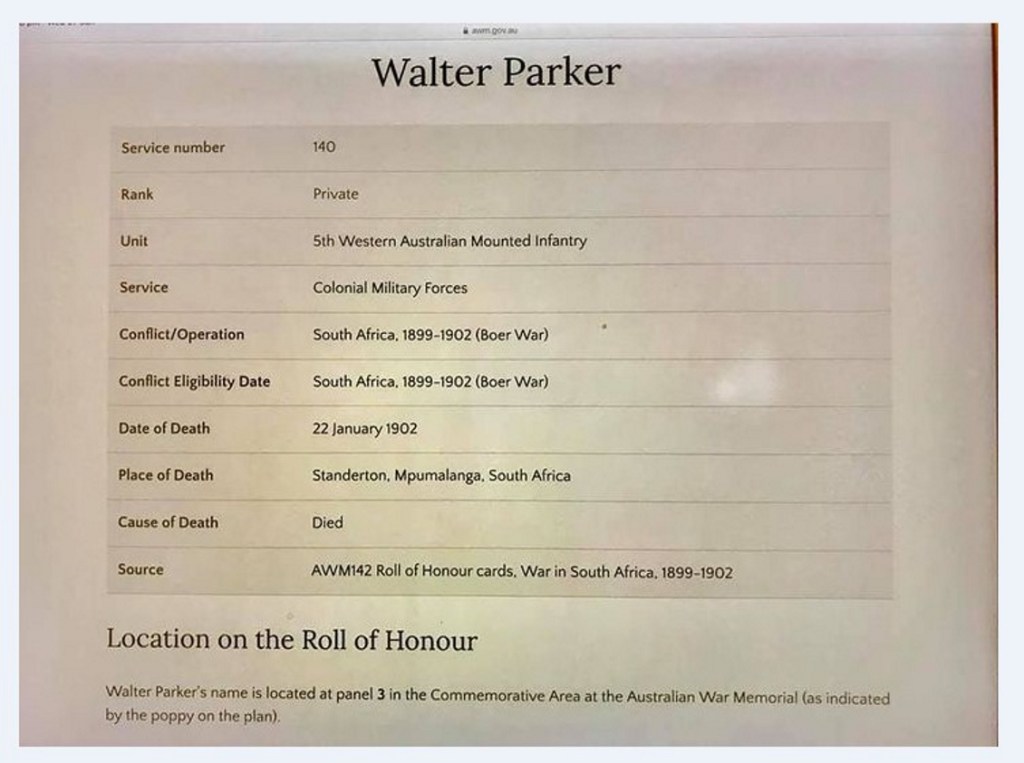
Walter Parker initially sought to join the First West Australian Contingent but his attempt to enlist from Greenough was unsuccessful. (Geraldton Advertiser, 14 Feb. 1902, p.3)   However a second attempt at Coolgardie resulted in acceptance into the Fifth West Australian Mounted Infantry. On 7 March 1901, following their departure from Fremantle the previous day, the West Australian published the names of the officers and men of the Fifth Contingent (p.3). In this Walter is described as ‘Walter Parker, 26 years, Gingin (W.A.), labourer; Coolgardie. No previous service’ and is ascribed the number 30. Numbers in this list were not given to officers (who conventionally did not receive them), seemingly, indicating that this was a service number. A roll of Western Australian contingents in a History of Western Australian contingents serving in South Africa published 1910 lists Walter as a member of the Fifth contingent but contains no service number. However P. L. Murray compiler of the official record of the war published 1911 states his service number as 140 in a nominal roll of the Fifth Contingent (p.424).


The Fifth Contingent takes the road . Unknown location Western Mail, 16 March 1901,p.36.

The Fifth Contingent arrived in Durban on 28 March and after the arrival of the Sixth Contingent on 29 April, the two were combined. Murray records their service with Major General F. W. Kitchener’s column in the Eastern Transvaal, Natal, and Orange Free State and with Colonel Campbell’s, Colonel Benson’s and Colonel Wing’s columns in Eastern Transvaal (p.418, 419). Casualty records show that their twelve months service was not without penalty. Total Fifth Contingent casualties were ‘ One officer and six non-commissioned officers and men killed or died from wounds, four non-commissioned officers and men died of fever or other disease and nine of all ranks wounded. ’ (History of Western Australian contingents, p.60.) Both contingents returned to Australia in 1902 on the transport Columbian, arriving at Fremantle on 29 April. Walter was not among them. He had died of typhoid at Standerton, Mpumalanga on 22 January 1902.  His death was reported in a local paper The Geraldton Advertiser:

Mr Walter Parker, who was well known here, has died in South Africa from fever. Poor Walter was anxiously waiting for his turn to go to South Africa. He wanted to go badly with the 1st W.A. Contingent but did not seem to be able to get on, and till recently. Walter was strongly advised to stay on the Greenough. Like a good many more young fellows, however, he was anxious to see the Boers. (14 Feb.1902, p. 3.) 

The Boer war has been described as an economic war with little impact on Australia but one in which Australia as a member of the Empire chose to be embroiled and it is obvious Walter, like others, saw the war in simple patriotic terms. In something of an irony, in 1900 before he achieved enlistment, Walter donated five shillings to the Patriotic Fund, a fund set up for the relief of the relatives of soldiers killed on active service (Daily News, 6 March 1900 p.4). His donation reveals that he was aware of the consequences of enlisting .

In the years which followed, Walter’s death became linked to the First World War rather than the earlier conflict. The confusion had set in by at least 1927, when on the death of his mother, her slightly inaccurate obituary (Northern Advertiser, 16 February 1927 p.2) stated that ‘three of her sons went to war and two, Walter and John were killed’ leading to the assumption that both deaths were in the relatively recent First World War. In fact, while James Dickerson died from wounds received at Gallipoli, Walter’s death was in the South African war. In 2021 this mistake has been corrected by Sue Mills’ research. Walter Parker’s service entitled him to the Queens South Africa Medal with clasps for Orange Free State, Transvaal, South Africa 1901 and South Africa 1902. To date the whereabouts of this medal is unknown.

Aboriginal service in the Boer War was not officially barred and it was only in 1909 that an amendment to the Defence Act prevented men not substantially of European origin from serving their country.  It is hard to know to what extent Aboriginal men were excluded from enlisting for South Africa. Sue Mills has speculated this issue may have relevance to Walter’s first unsuccessful bid to enlist. If so, as was the case with recruiting for the AIF, it seems that success was linked to the decisions and prejudices of individual recruiters. Although Aboriginal man Fred Mead writing in the West Australian in 1901 said that he had been rejected (28 Nov 1901 p.5) the case of Jack Alick from Braidwood, New South Wales, a member of both the Colonial and Commonwealth forces, whose Aboriginality is clear in a contemporary photo in the Town and Country Journal, demonstrates that Aboriginality was not necessarily an unofficial bar to service. 

I first became aware of Aboriginal Boer war service in 1994 when investigating the New South Wales Darug Lock family and stumbled across the service of William Stubbings (Jim Kohen The Darug and their Neighbours, 1993 p.143). Since then eight more Aboriginal servicemen have been located, spear headed by the research of historian and Boer war specialist Peter Bakker. The discovery of Walter Parker brings the number to ten and also has significance as the first known death of an Aboriginal man during military service. The ten men have their origins across the Australian continent – in Western Australia, Souh Australia, New South Wales and Victoria and served in both the Colonial forces and after Federation in those of the Commonwealth. At least two photographs of Boer War units containing yet to be identified Aboriginal men,indicate the potential for numbers to increase and that current total of ten does not represent all who served.

Maureen Roberts who alerted me to the service of Walter Parker and Sue Mills who made this exciting discovery and who generously shared her detailed research, are to be applauded for bringing to light the hitherto largely forgotten service of Walter Parker and enabling him to take his place with those Aboriginal Boer war soldiers whose service is already recognised. Walter Parker is represented on the Roll of Honour at the Australian War Memorial. Now thanks to Sue Mills he can also be acknowledged as a Boer War Aboriginal serviceman.

Roll of Honour Card for Walter Parker    https://www.awm.gov.au/collection/R1712520

Post Script

Also descendants of Mary Benyup and serving in World War One were three of Walter Parker and James and Harry Dickersons’ nephews  – Aubrey Malcom Lawrence, and Herbert Hugo Lawrence (enlisted as Hubert Lawrence) and Frank Lawrence.  All five World War One men are listed in Philippa Scarlett Aboriginal and Torres Strait Islander volunteers for the AIF : the Indigenous response to World War One latest edition 2018. National Archives of Australia records show that descendants of Mary Benyup continued to serve their country in Australia’s post World War One conflicts.

Philippa Scarlett

13 February 2021

I would like to acknowledge research by Sue Mills and her papers Mary’s Children and Walter Joseph Mortimer [AKA Walter Parker] Feb.2021 and research by Maureen Roberts including her paper Extract from my work in progress on the Dickersons.

Details of the Fifth Contingent mentioned here unless otherwise stated are to be found in Official records of the Australian military contingents to the war in South Africa. compiled and edited for the Department of Defence by Lieut.-Colonel P. L. Murray, R.A.A. (ret).Melbourne 1911 and the History of Western Australian contingents serving in South Africa during the Boer War (1899-1902) 1910.

Posted in WW1 | 3 Comments

THE ELUSIVE JACK MILTON, WW1 AIF: A MYSTERY SOLVED

As a result of years of research Benita Parker has at last been able to solve one of the mysteries associated with Aboriginal war service.

The case of Jack Milton of Karuah has long puzzled those attempting to identify Aboriginal men who served in World War One. Despite numerous reports of his service it was impossible to locate his service record in the records held by the National Archives of Australia, the key to identifying him as a member of the AIF.

OLYMPUS DIGITAL CAMERA

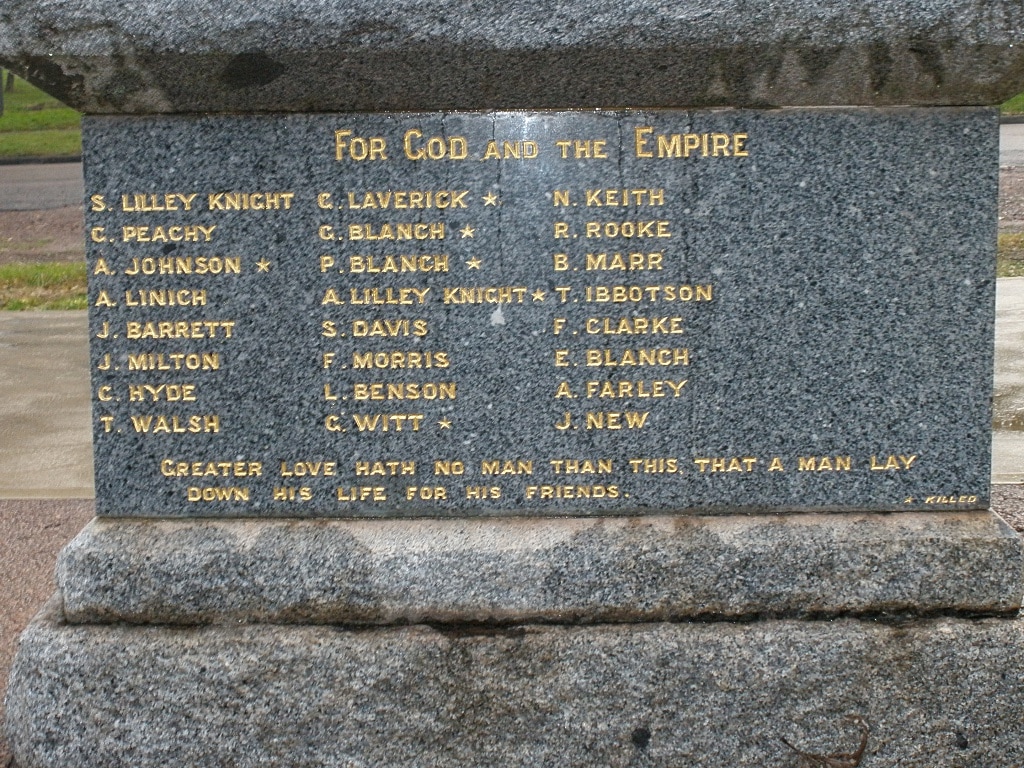
                               The War Memorial, Karuah New South Wales

However not only does his name appear on the Karuah (New south Wales) War Memorial but newspaper references and letters written by him to newspapers, as well as information in the Aboriginal magazines Our Aim and Evangel, taken together, provide an outline of his service. This is that he enlisted in 1915 and served two years in France as a private. Here he was wounded three times before being invalided home in late 1917, disembarking in Melbourne. These also show he married by 1915 and had one daughter born c.1916. He and his wife returned to Karuah after his arrival in Australia but no marriage or birth records in the name of Milton can be located.

As a result of investigations of genealogical and other sources Mrs Parker has amassed convincing evidence pointing to the enlistment of Jack Milton as John Edward Milligan, Service Number 4524. The service record of this man coincides with the known facts about the service of Jack Milton – although this shows he was wounded only once,  he was hospitalised three times. It is not uncommon for this information to become distorted, either intentionally or unintentionally. Milligan in his service record and elsewhere also says he was born in New Zealand and claims to be half Maori. His record itself states ‘half caste’ but this is crossed out. The New Zealand birth is contradicted by Mrs Parker’s research and by his statutory declaration made 1948 and included in his service record. It was not unusual for Aboriginal men to claim a Maori heritage which they thought would assist their successful enlistment. Mrs Parker’s research into the Milton family confirms Jack Milton’s Aboriginality.

Her research indicates Jack was known as Milton in Karuah but that in official documents like his service record and his land acquisition c 1920, shown in a 1920 Karuah Parish map, he used the name Milligan. He later moved to Sydney, when is unclear, but from correspondence in his service record this was sometime in the mid 1920s. The correspondence shows he probably spent the rest of his life in the inner Sydney area. Here he abandoned his wife and formed another relationship with a woman named Annie Luther. He died in Redfern, registered as Milligan in November 1954. His daughter Dorothy, described as Dolly Milton, is photographed as a student at Karuah school in 1924. Her birth in 1916, to father John E Milligan and mother Eva Woods is registered as Milligan. Whether the Karuah Aboriginal community knew he also used the name Milligan is not known but they consistently refer to him as Milton in references to him.

Mrs Parker’s research, which extends well beyond the brief outline detailed here, as well as solving what has been an ongoing puzzle, draws attention to two of the subterfuges which can bedevil the location of Aboriginal volunteers: false statements as to race and place of birth – and use of an alias. Both can prevent or delay recognition and obscure real identity and family connections. It also demonstrates the value of information in a service record in fleshing out a man’s life after return to Australia and providing a key to locating further information about him. Mrs Parker has made full use of these opportunities. Her current quest is to trace Jack Milton/Milligan’s descendants. She would welcome any information about Jack Milton/Milligan and his family. She can be contacted at bgparker@optusnet.com.au.

Identifying Aboriginal servicemen is in many cases not an easy task, particularly if complicated by the use of an alias or other false information. Unfortunately it is likely in many cases real identities may never be found. The seemingly impossible case of Jack Milton, unravelled so painstakingly by Mrs Parker, is a welcome success story.

Philippa Scarlett
13 November 2020

Posted in WW1 | 4 Comments

ABORIGINAL SERVICE AND WW1: 61 MORE VOLUNTEERS LOCATED

Since the publication in April 2018 of Edition Four of Aboriginal and Torres Strait Islander volunteers for the AIF: the Indigenous response to World War One, more names of Aboriginal volunteers have come to light, from various sources. These include those with an ongoing interest: Sandra Smith of Dubbo, Des Crump and Marg Powell of the State Library of Queensland – and above all Leura historian Christine Cramer whose consistently detailed research has resulted in recent years in the inclusion of many who would otherwise have been unrecognised; also of  course the diligence of Michael Bell, Indigenous Liaison Officer at the Australian War Memorial, aided by his community contacts and position as a natural recipient of information from relatives. On the other hand the past year has witnessed the removal of a small number men from the list. This has usually been because, although not of European origin, their heritage has not been Aboriginal. In some of these instances the supposed Aboriginality of a man stems from marriage into an Aboriginal family, something which can obscure actual identity to descendants. In compiling the Indigenous Histories list Christine Cramer and I have endeavoured to maintain an independent position and have been acutely aware of the need to locate documentary evidence for Aboriginality (some of it an intersecting set of sources) rather than hearsay advice or acceptance based on the misinterpretations alluded to above.

Below are the names of 61 volunteers discovered in the last eighteen months. These, added to those listed in Aboriginal and Torres Strait Islander volunteers for the AIF take total volunteers to date to 1,127 men. Other totals often quoted are in excess of this number and the implication too is that all fought for their country. However  It is important to remember that not all volunteers were accepted into the AIF or if accepted served overseas. Those with N/A or Depot instead of a service number or a service number with a letter prefix, fall into these categories.  These men still deserve recognition because of their willingness to serve and are an integral part of the Indigenous response to World War One. Others currently counted in some publications on and off line, include those eliminated by Indigenous Histories because of identification issues already discussed.  Another relevant factor affecting number counts is that the Indigenous Histories list is one of volunteers for the Australian Imperial Force (AIF) and excludes the handful of Aboriginal men known to have served in the New Zealand Expeditionary Force (NZEF) or in Australia’s navy. These are referred to in Aboriginal and Torres Strait Islander volunteers for the AIF but not counted in the AIF volunteer list. The Indigenous Histories list also does not include men of South Sea Islander origin who by definition are not indigenous to Australia, although in many cases they have strong Aboriginal family ties. For all these reasons Indigenous Histories’ numbers are in some cases not as high as those often popularly quoted for Aboriginal service.

Despite the fact that they are  small in number in relation to AIF total enlistment, all these men are important because of the context in which they volunteered – that of racism and discrimination reflected in the Defence Act. Enlistment provisions were relaxed in May 1917, when a regulation was introduced to allow the enlistment of men with one white parent. However this did not increase Aboriginal enlistment, which like general enlistment was decreasing. Nor did it alter the racist intent of the Defence Act which remained unchanged. Known Aboriginal volunteers have increased dramatically in the last two decades, more than tripling in number. It is more than likely that additional names to those listed here will be located in the future.

NAMES OF VOLUNTEERS LOCATED SINCE APRIL 2019

Name and Service Number Place of Birth Enlistment Place Link to Record
ALDRIDGE Daniel Edgar 4011 Pialba Qld Maryborough Qld Service Record
ALDRIDGE Harry Edward 540 Maryborough Qld Maryborough Qld Service Record
CAREY Barnett Lucius 2601 Whittlesea Vic Melbourne Vic Service Record
CAREY Bertram Avenue Shier 49 Ferntree Gully Vic Melbourne Vic Service Record
CAREY Lucius George 3287 Carisbrook Vic Melbourne Vic Service Record
CAREY Victor Falkland 5803 Ferntree Gully Vic Melbourne Vic Service Record
CARROLL Alfred Lawrence 2232 Echuca Vic Bendigo Vic Service Record
CARTER Christopher Wilson 6232 Hamilton Vic Hamilton Vic Service Record
CLARKE Ernest V40075 (Depot 40075) Swan Hill NSW Bendigo VIC Service Record
CLARKE John Leslie 2349 Balranald NSW Cobram VIC Service Record
CLARKE Ottie 6713 Moulamein NSW Cootamundra NSW Service Record
COUZENS Nicholas N/A* Purnim VIC N/A Not Digitised
CURLEY Horace Basil Depot Northam WA Fremantle WA Service Record
DARE Thomas Depot Charlotte Waters NT Townsville Qld Service Record
DELANEY Abby (Albert) William Q13251 Auckland NZ [Aramac Qld] Brisbane Qld Service Record
DIAMOND John 3566 Kalgoorlie WA Heliopolis Egypt Service Record
DIXON Jack 5081 Dapto NSW Liverpool NSW Service Record
DIXON William 3734 Coolangatta NSW Casula NSW Service Record
DIXON William N/A* (first enlistment of William Dixon 3734) Coolangatta NSW N/A Not Digitised
DREDGE Charles N/A* Forbes NSW N/A Not Digitised
DREW Alfred William 3037 Goondiwindi (Gundiwindi) Qld Armidale NSW Service Record
DUNN Pompey N/A* Alice Springs NT Adelaide SA Not Digitised
ELLAIS (ELLIS) George 2356 Mungindi NSW Brisbane Qld Service Record
FLACK James William Allen 2332 Singleton NSW West Maitland NSW Service Record
HAYES Leslie James 1768 Robertson NSW Brisbane Qld Service Record
HAYES Walter George Mark Q13780 (N/A) Bowral NSW Brisbane Qld Service Record
HEREWANE Joseph 1013 Kaipoi NZ [Australia] Wangaratta Vic Service Record
HEWITT Oliver S12824 (Depot/12824) Goolwa SA Adelaide SA Service Record
JOHNSON Nicholas S1429 (Depot) Poltalloch SA Adelaide SA Service Record
JONES Arthur Bernard 463 WA [Sydney NSW] West Maitland NSW Service Record
JONES Samuel Joseph 1197 Sydney NSW Liverpool NSW Service Record
JORDAN Esbert Denis Roy 2953 Carcoar NSW West Maitland NSW Service Record
LENHAM Herbert Leslie 1174 Woonona (Wanoona) NSW Newcastle NSW Service Record
LENHAM Thomas Harold 823 Clifton NSW West Maitland NSW Service Record
LINDUPP John N/A* N/A [Vic] N/A [Vic] Not Digitised
LOWE Percy 2045 Busselton WA Blackboy Hill WA Service Record
McCART John Charles N/A* Bendigo Vic North Melbourne Vic Not Digitised
MILLER Joseph 6337 (alias of Donald Alexander Campbell) Melbourne Vic Melbourne Vic Service Record
NYBERG Reginald Cecil 2628 Milton NSW Holsworthy NSW Service Record
PERFECT William Alfred 3429 Rockhampton Qld Maryborough Qld Service Record
PHOENIX Logan John N82639 Newcastle NSW Sydney NSW Service Record
POLLOCK Frank 644 St. George Qld Warwick Qld Service Record
POLLOCK Walter 7291 Noondoo Station, Dirranbandi Qld Warwick Qld Service Record
SIMPSON George N/A* N/A [WA] Greenbushes WA Not Digitised
SINCLAIR Frank Pretoria 91543 (N91543) Robertson NSW Lismore NSW Service Record
SLEEWEE Thomas Q24823 Cairns Qld Cairns Qld Service Record
SMITH Edward James 2225 Qld Dubbo NSW Service Record
SMITH Harold William N/A (Depot) Albany WA Collie WA Service Record
SMITH Joseph 2474 (alias of Henry George Stafford) Gunnedah NSW Liverpool NSW Service Record
STENNER Charles Leslie N/A* N/A [address Goulburn NSW]  N/A Not Digitised
SULLIVAN John 7566 Deniliquin NSW Seymour VIC Service Record
SULLIVAN N/A* (first enlistment of John Sullivan 7566) Deniliquin NSW N/A Not Digitised
TEMPLETON Virgil Charles 5032 (alias Robert Taylor) Ipswich Qld Brisbane Qld Service Record
TIEDEMAN Otto Arthur 3693 West Maitland NSW Holsworthy NSW Service Record
WENBERG John William Clarence N/A* Grafton NSW Grafton NSW Record
WHARTON Ernest Oswald 4400 Walgett NSW Moree NSW Service Record
WHARTON Frederick Stanley 6530 Walgett NSW Charters Towers Qld Service Record
WHARTON Herbert John 2398 Narrabri NSW Moree NSW Service Record
WHATMAN William John 5199 Bowral NSW Liverpool NSW Service Record
WHATMAN William John 212 Moss Vale NSW Armidale NSW Service Record
WILLIAMS William 2672 Auckland NZ [Emmaville NSW] Sydney NSW Service Record
WILLIAMS William Henry N/A* Newcastle NSW N/A Not Digitised
WOOLLEY William James 2272 Echuca Vic Bendigo Vic Service Record

 NOTE
The details in this list are based on National Archives of Australia record descriptions from NAA series B2455 and series MT1486/1.  Volunteers named in MT1486/1 are indicated by an asterisk:  the symbol *.  Descriptions of records in these series are available online at www.naa.gov.au.  All records in series B2455 have been digitised but only a small proportion of those in MT1486/1.  (Where a record has not been digitised, a digital copy can be ordered on the NAA website.)

Service numbers are based on an examination of the entire contents of a service record.  Where a service number named here differs from the number named in an NAA record description, the NAA number is shown in brackets.  Place names are spelled in the conventional manner.  Where this differs from the record description, the latter also appears in brackets – for example Maloga and (Malaga).  In some cases a place of birth or enlistment is not included in the service record, or has been found to be spelled incorrectly or simply to be incorrect.  Where it is known, the correct information is provided in square brackets – for example Auckland NZ [Emmaville NSW].

Philippa Scarlett and Christine Cramer

5 October 2019


Posted in WW1 | Leave a comment

UNPACKING ALF’S CRICKET CASE : THE STAFFORD FAMILY AND WORLD WAR 1

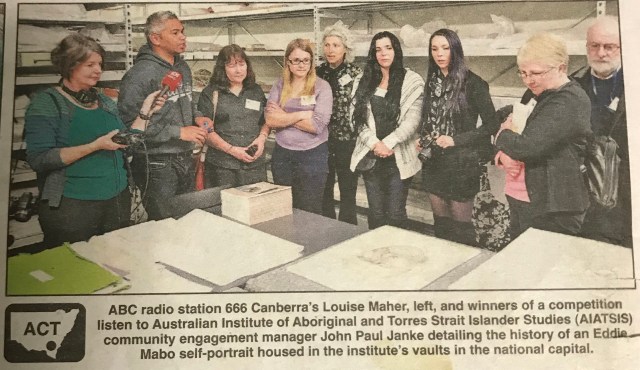
Michelle Flynn with her daughter, fourth and third from right  Koori Mail 2014 Naidoc

In 2014 Michelle Flynn entered and won a Canberra local radio competition – the prize a tour of the Australian Institute of Aboriginal and Torres Strait Islander Studies (AIATSIS). After the tour she mentioned to AIATSIS staff the battered cricket case which she had inherited on the death of her grandfather Alf (Alfred) Stafford. This was to have enormous consequences. The case which referenced Alf’s enthusiasm for cricket (he bowled the first ball at Manuka oval, Canberra, played Sheffield Shield and played on the same side as Don Bradman) was stuffed with photos, letters and other documents and memorabilia, amongst which was a family tree. The information in this tree showed Alf’s descent from Kitty, known to be a member of the Warmuli (Prospect) Clan of the Darug and one of the children admitted in 1814 to Governor Macquarie’s Native Institution. Kitty later married convict Joseph Budsworth. Not only that, the tree showed that Alf descended from the New South Wales Gamilaroi Blackman family. Although Alf had told his family about his Aboriginality, they had been unaware of  its detail and extent. Now examination of information in his (and their) family tree has facilitated an exciting understanding of the family’s place in the Aboriginal history of New South Wales, one which they have embraced with pride and enthusiasm.

Michelle subsequently donated the case’s precious contents (now known as the Stafford Collection ) to AIATSIS. Initially its significance to AIATSIS was in large part the fact that Alf, an Aboriginal man, had worked for eleven of Australia’s prime ministers either as personal driver or cabinet officer, including driving for Sir Robert Menzies, for whom he became a trusted confidant. However the wider significance of the family tree and the opportunities it gave for exploring more of the extended Stafford family were not lost on Michelle, who with help from family members, AIATSIS and others began unpacking the information in the tree and using it to extend and expand her family knowledge, including learning more about the Stafford Blackman connection. This stemmed from the marriage of John Allan Stafford, son of Joseph Stafford and Catherine Budsworth (daughter of Kitty and Joseph Budsworth) to Mary Ann Blackman (daughter of Gamilaroi Thomas Blackman).They were the parents of twelve children, the youngest Michelle’s grandfather. In the investigation process Michelle also found connections to the New South Wales Aboriginal families Cain, Griffin, Chatfield and Talbott.

In one area in particular the information uncovered was unexpectedly rich. A simple search of National Archives of Australia RecordSearch  shows the World War One AIF service of Alf’s brothers John Harold Stafford, Charles Fitzroy Stafford and Clyde Gilford Ortley Stafford.  Although Alf  himself was too young to serve in the first war his cricket case also yielded information about his inter war service in the in the militia.
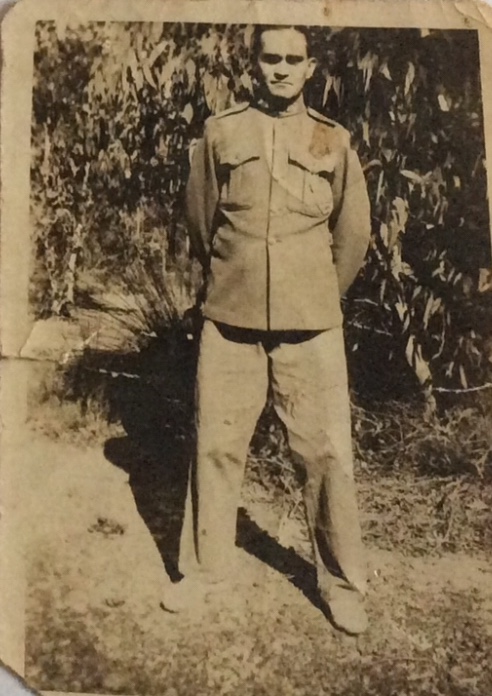
alf stafford holsworthy

Alf Stafford Holsworthy army camp NSW   Courtesy Michelle Flynn, Stafford Collection, AIATSIS
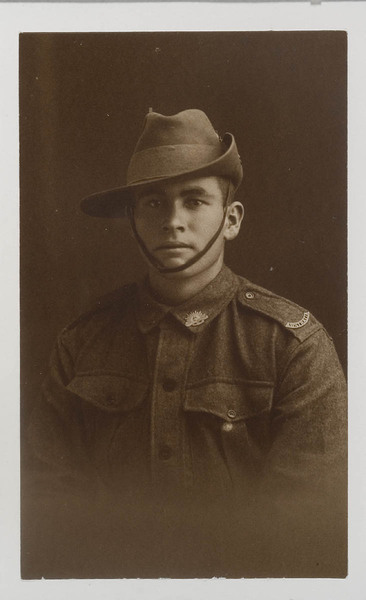
STAFFORD JOHN HAROLD ALNSW AIF SERIES

John  Harold Stafford  (brother of Alf)  Mitchell Library, State Library of New South Wales

Additional research has led to the discovery, so far, of a total of 29 volunteers for  service in the First World War from the extended Budsworth/Stafford/Blackman and connected families – all but three serving overseas. These men are included in the list of men contained in Aboriginal and Torres Strait Islander volunteers for the AIF: the Indigenous response to World War One, fourth edition, (Philippa Scarlett), published in 2018 – with one exception, Henry George Stafford who served as Joseph Smith. His grandson Bill Reid only recently contacted Michelle to let her know that his grandfather enlisted under an alias and was actually a brother of Walter James Stafford and like him a first cousin of the Stafford brothers.

The service of these men, whose names are listed below, encompasses so many of the elements which make up the experience of all volunteers for the First AIF– the larrikin and other more serious misbehaviours which triggered punishments ranging from a few days detention or fines to the Field Punishment No 1 (being tied to a wheel) experienced by Joseph Smith aka Henry George Stafford as well as the damage to health which was characteristic of most volunteers. Records show that in almost all cases the group’s service was at physical cost to their well-being: they suffered from mumps, malaria and other non specified sickness, lost limbs, were wounded by gun fire and shell fragments, sometimes more than once and were gassed with effects which persisted post war. Some like James Budsworth, wounded and suffering trench fever, were sent home early with medical discharge. Five lost their lives on the Western Front : Roderick Hamilton Budsworth, William Allan Irwin, John Talbott, Joseph William Hamilton, who enlisted as Joseph William Buddsworth and Walter James Stafford.

Roderick Budsworth  [alias Rodger Budsworth]   State Records of NSW Series NRS2327 Item 3/597
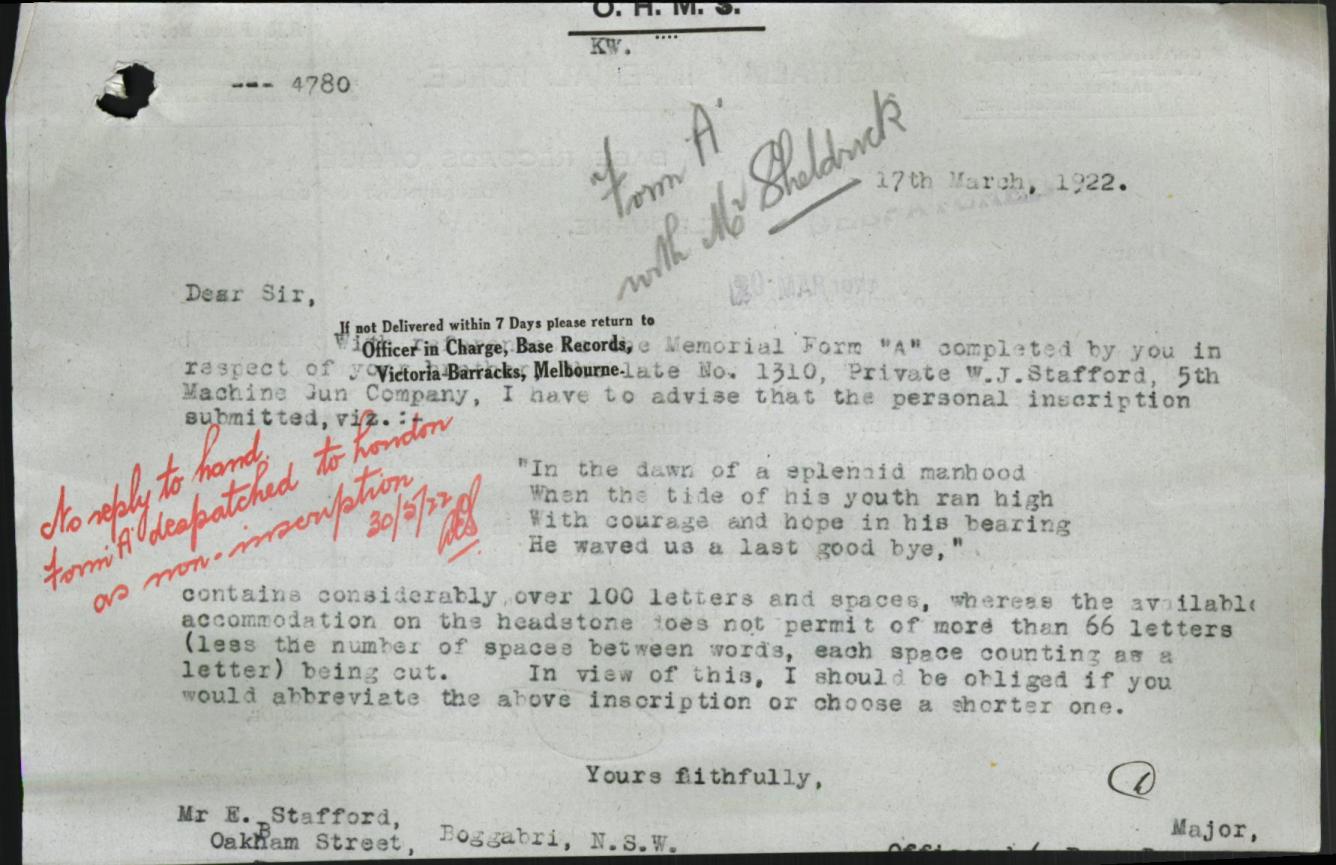
walter james stafford inscrription letter

Letter to Edward Stafford about his suggested inscription for his brother Walter Stafford’s headstone. Unfortunately it exceeded the permitted word count. The letter is  annotated  ‘No reply to hand. Form A despatched to London as non inscription.’               NAA: B2455 WALTER JAMES STAFFORD
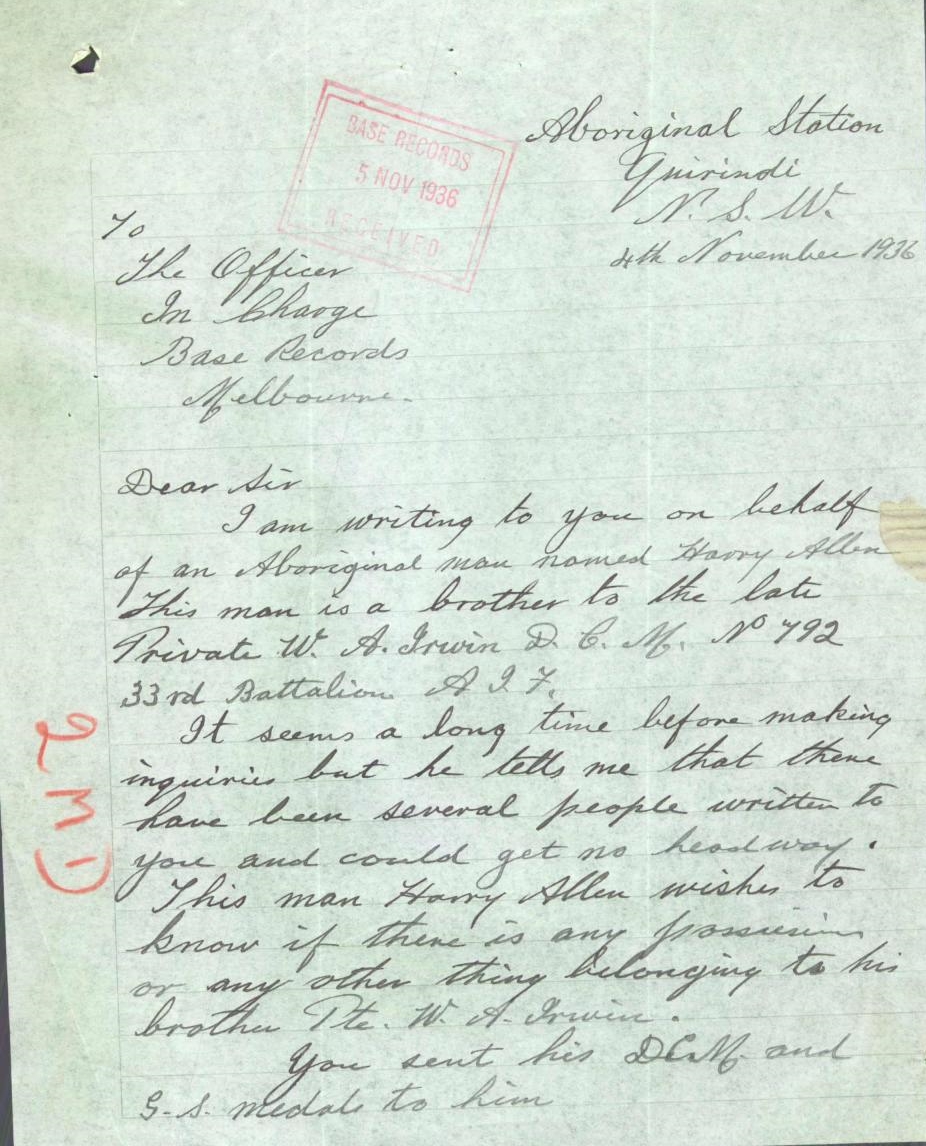
quirindi mission harry allan letter re william irwin crop

Extract from a letter from the Manager, Quirindi Aboriginal Station in connection with the distribution of William Irwin’s possessions.   NAA: B2455, WILLIAM ALLAN IRWIN

 William Allan Irwin DCM: the framed photograph kept by his family. Note the lower half of the image appears to have been added to the torso  Courtesy great nephew Peter Milliken

William Allan , who enlisted as William Allan Irwin was the only member of the extended family to be decorated. He posthumously received the Distinguished Conduct Medal, one of only four known Aboriginal men to receive this award.

Most of the group belonged to infantry battalions, serving predominantly in France and Belgium but some men were members of artillery units and light horse regiments. The focus of the latter was the Middle East. Two of Alf’s brothers Charles Fitzroy Stafford and Clyde Gilford Stafford served at Gallipoli and Charles Stafford was a member of 12th Light Horse, which took part in the cavalry charge at Beersheba on 17 October 1917.

Charlie Fitzroy Stafford

Charles Fitzroy Stafford  (brother of Alf) Courtesy Michelle Flynn, Stafford Collection, AIATSIS
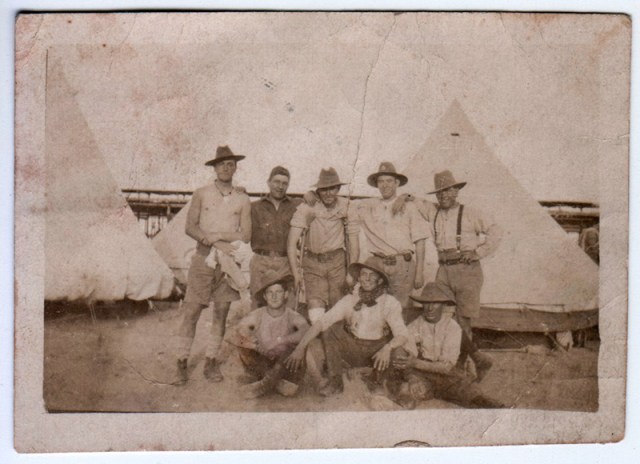
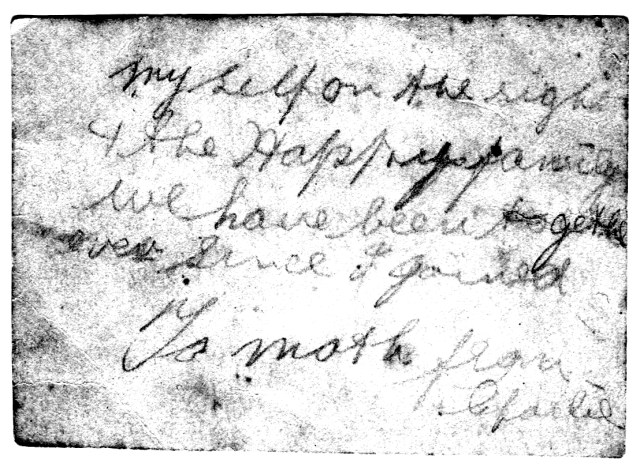
Charles Stafford, Middle East back row right. This snap is from a Stafford family album The reverse reads ‘Myself on the right & the happy family We have been together ever since I joined To Mother from Charles’  Courtesy Diana Griffiths

James Budsworth at 41 was one of the older volunteers. He served with the Light Horse remounts which attracted older men with horse handling experience. The records show that the 29 volunteers ranged in age from the 44 to 18 years but in fact Wilfred Budsworth gave false information and was actually 16 when he volunteered. Of those underage there is evidence of only one instance of the permission of parents being given for the enlistment of their 19 year old son, Ernest John Blackman. Enlistment under other names and spellings – eg Joseph William Buddsworth (Hamilton), Joseph Smith (George Stafford) were possible devices to avoid the attention of parents or close relatives.

        Ernest Blackman who enlisted age 19 with his mother in later life    Courtesy  Michelle Flynn

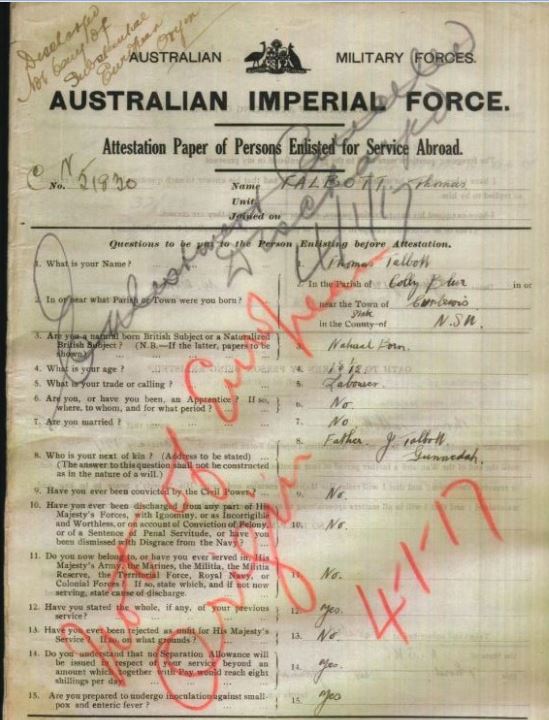
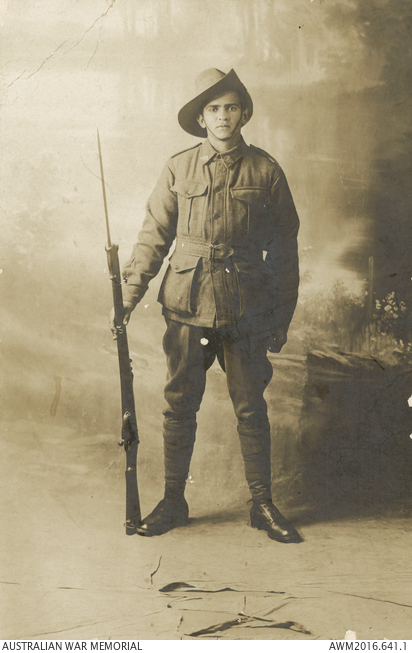
Some like John Harold Stafford and William Wallace Chatfield tried to enlist more than once before they were successful. Of those who were rejected only two were refused explicitly because of their race – (William) Thomas Talbott and William Wallace Chatfield. Chatfield’s successful attempt after initial rejection as ‘unsuitable physique (colour)’ is yet another example of the fact that while it is clear recruiters ignored the Aboriginality of others (something which in some cases is obvious from secondary sources) they were not consistent in their enforcement of the provisions of the Defence Act, which precluded Aboriginal enlistment. This is also clear in the cases of Herbert Hamilton whose service record noted his father was white and mother half caste’ but who still achieved entry into the AIF. It is worth noting this was before a May 1917 military order which allowed the enlistment of men with one white parent.

thomas talbott edit2

NAA: B2455,TALBOTT, WILLIAM THOMAS.

william wallace chatfield awm

William Wallace Chatfield   Australian War Memorial: AWM2016.641.1

Information given on enlistment locates the extended family predominantly in northern and central western New South Wales and shows that the volunteers came from places like Maitland, Gunnedah, Binnaway, Coonabarabran and Narrabri with others from Inverell and additional New England locations. Most were labourers but occupations included drover, brickmaker, coachmaker, blacksmith, and farmer. The records show the enlistment of brothers – something common to many families and that family members volunteered from early 1915 to late 1918. In two instances, Herbert Hamilton and Ernest Blackman  both embarking late 1918,  returned to Australia  before reaching England, when their troop ship was recalled  because of the cessation of hostilities.

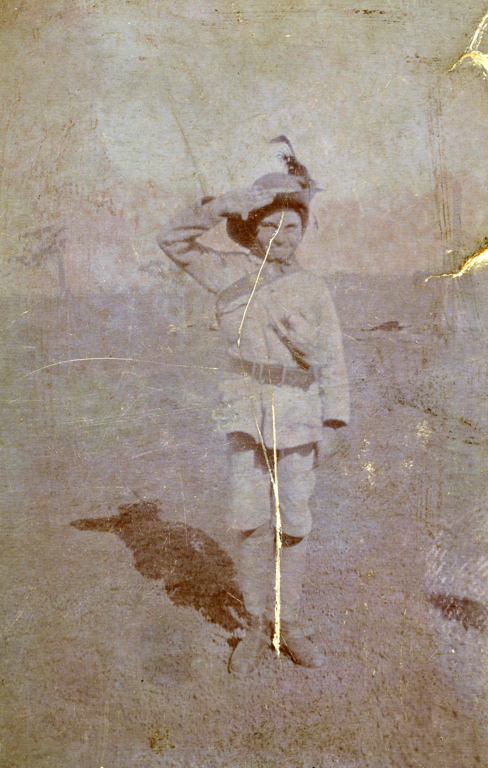
Perhaps the most touching object in Alf’s cricket case is the medallion which depicts his three soldier brothers and would have been worn as a brooch by their mother, who with all AIF mothers shared that combination of pride and fear which characterised the feelings of  close relatives. Complementing this is a photo of Alf, aged eight which shows him dressed in AIF uniform, indicative of his family’s support for the war.

ALF STAFFORD 8 YEARS OLD IN AIF UNIFORM

Alf Stafford aged eight in Light Horse uniform    Courtesy Michelle Flynn, Stafford Collection, AIATSIS
Medallion brooch showing the three soldier brothers of Alf Stafford   Courtesy Michelle Flynn, now held in the Stafford Collection, AIATSIS

Alf’s careful guardianship of his family history shows his pride in his family and bears witness to his own considerable achievements – as well as opening a window into his Aboriginality. This is augmented by the ability to use the information he saved, combined with external sources, to identify the records of war service of his brothers and extended family – something Alf would have been unlikely to have anticipated. These records, because of the detailed information they contain, deepen the knowledge of his family and form an invaluable source of information about each individual service man, his family connections, where he was born and lived and so much more.

The service details of the family network discovered by Michelle  represent a microcosm of the AIF experience. They show that Aboriginal people who served in the AIF had the same range of experiences as the AIF as a whole but that some also encountered the racism implicit in the Defence Act – the rejection of two men on race grounds. It is hard to know to what degree this racism permeated the AIF following enlistment or whether it affected any of the men listed here but examples relating to other men demonstrate that it was not unknown (see Philippa Scarlett in Aboriginal History: Volume 39 2015). What is clear is that the records of these men demonstrate the willingness of an extended Aboriginal family group to serve their country despite the existence in it of racism and the discrimination and disadvantage it engendered.

On 9th March 2019, close to the anniversary of the death in battle of Walter James Stafford, some of the members of the extended family gathered at the Australian War Memorial to witness the Last Post Ceremony commemorating his death – brought together by their family connections and the efforts of Alf Stafford’s granddaughter Michelle and her realisation of the important legacy he had entrusted to her.

.
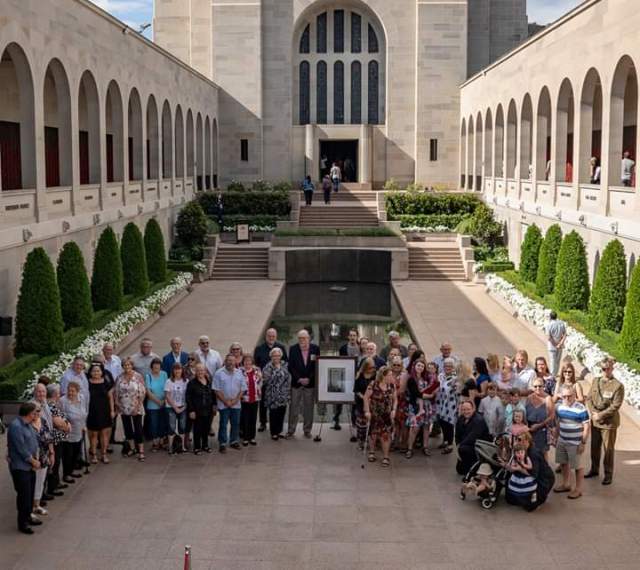
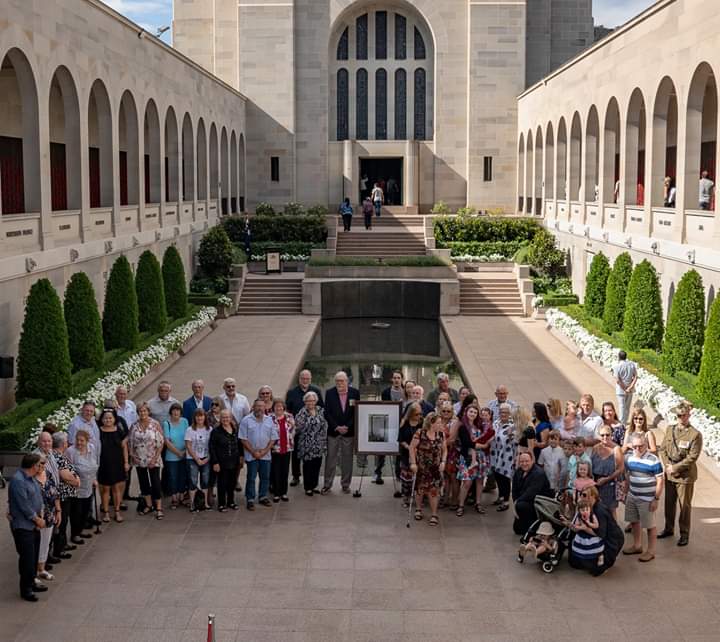
Some of the extended family who gathered at the Australian War Memorial on 9 March 2019 to commemorate the anniversary of the death of Walter James Stafford (Killed in action 6 May 1916). Courtesy Michelle Flynn

Michelle Flynn and Philippa Scarlett

15 June 2019
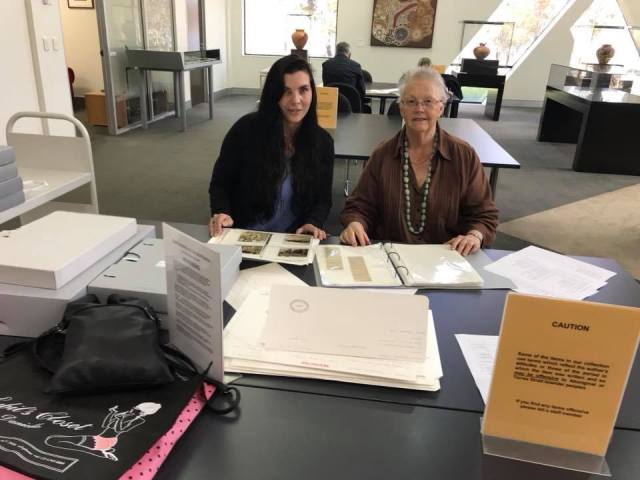
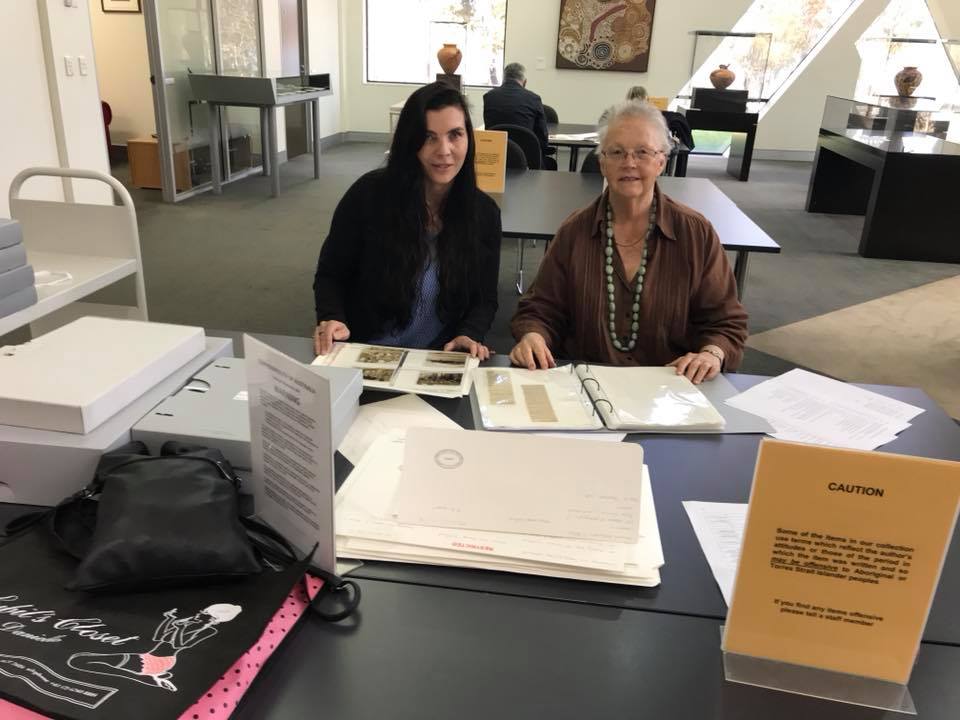
The authors examine the Stafford Collection, AIATSIS

MEMBERS OF THE STAFFORD, BLACKMAN AND EXTENDED FAMILY WHO VOLUNTEERED FOR THE FIRST AIF

Note This is not an exhaustive List. The men have been identified by Michelle with help from family members including Jo Rose, Peter Milliken, Aunty Madge Nixon and Bill Reid. Information about the Stafford brothers is featured in AIATSIS online Exhibition The Stafford Brothers.

NAME, SERVICE NUMBER AND PLACE OF BIRTH

BAKER Walter James Depot Coonabarabran NSW

BLACKMAN Ernest John  67827  Gulgong NSW

BUDSWORTH James 2465 Narrabri NSW

BUDDSWORTH Joseph William 3971A (also known as Joseph William Hamilton) Inverell NSW

BUDSWORTH Joseph 1381 Sydney NSW

BUDSWORTH Robert (known and enlisted as Walter Coleman 388)

BUDSWORTH Roderick Hamilton 18 Coonamble NSW

BUDSWORTH Wilfred Ernest N91395 (Depot) Tamworth NSW

CAIN George William N94566 (Depot 94566) Coonabarabran NSW

CAIN James Edward 3146 Coonabarabran NSW

CHATFIELD Alfred William N/A (Depot) Coonabarabran NSW

CHATFIELD William Wallace 57312 Coonabarabran NSW

COLEMAN Walter John 388 Newcastle NSW

GALVIN William John  1132 Inverell NSW

HAMILTON Joseph. Served as Joseph William Buddsworth 3971A

HAMILTON Henry Claude 3162A Inverell NSW

HAMILTON Herbert 3742 Yugilbar (Copmanhurst) NSW

IRWIN William Allan 792. Alias of William Allan. Coonabarabran NSW

SMITH Joseph 2474.  Alias of Henry George Stafford] Gunnedah NSW

STAFFORD Charles Fitzroy 190 Mudgee NSW

STAFFORD Clyde Gilford Ortley 3107 3157 Coonabarabran NSW

STAFFORD George Montgomery 14729 Angledool NSW (Angleedool

STAFFORD John Harold 64759 Binnaway NSW

STAFFORD Walter James 1310 Gunnedah NSW

STAFFORD William Henry 1909 Coonbarabran (Coonabaran) NSW

TALBOTT John 5220 Pilliga NSW

TALBOTT William Thomas N51830 Colly Blue Curlewis NSW

TIGHE Patrick 3313 Mudgee NSW

TIGHE William James 57648 Narrabri NSW

Michelle would like to thank the following people who have helped her find out more about her extended family’s service in the First World War.

Michael Bell

Paddy Chatfield

Christine Cramer

Rosemary Norman Hill

Rita Metzenrath

Peter Milliken

Mark Muliet

Madge Nixon

Joy Pickette

Philippa Scarlett

Jo Rose

Bill Reid

Dolly Talbot

SOME USEFUL SOURCES

AIATSIS, https://aiatsis.gov.au/exhibitions/stafford-brothers

Indigenous Histories, https://indigenous-histories.com/2013/10/29/walter-budsworth-coleman-aif-member-and-warmuli-clan-descendant/ ; https://indigenous-histories.com/2013/02/06/aboriginal-writing-letters-and-documents-in-ww1-service-records/

Marg Powell, Des Crump, State Library of Queensland http://blogs.slq.qld.gov.au/ww1/2017/11/24/james-budsworth-2485/

Mitchell Library, State Library of New South Wales. New South Wales officers and men of the Australian Imperial Force (A.I.F.) and the Australian Naval Forces: portrait collection, 1919. Crown Studios. P1/ Servicemen (BM). (portrait of John Stafford)

National Archives of Australia. Australian Imperial Force, Base Records, B2455 Personnel dossiers for first Imperial Forces ex-service members, lexicographical series.1 Jan1914 – 31 Dec 1920.

National Archives of Australia. Australian Imperial Force, Base Records, MT 1486/1, Applications to enlist in the Australian Imperial Force.

National Archives of Australia. Australian Imperial Force, Base Records, B2455 Personnel dossiers for first Imperial Forces ex-service members, lexicographical series.1 Jan1914 – 31 Dec 1920.

National Archives of Australia. Australian Imperial Force, Base Records, MT1486/1, Applications to enlist in the Australian Imperial Force.

Joy Pickette Footprints in the Sand. Stories of Aboriginal soldiers in the First World War who had a connection to Coonbarabran, Coonabarabran DPS Local & Family History Group Inc. 2017.

Philippa Scarlett Aboriginal and Torres Strait Islander volunteers for the AIf: the Indigenous response to World War One, fourth edition, 2018.

Posted in WW1 | 1 Comment